





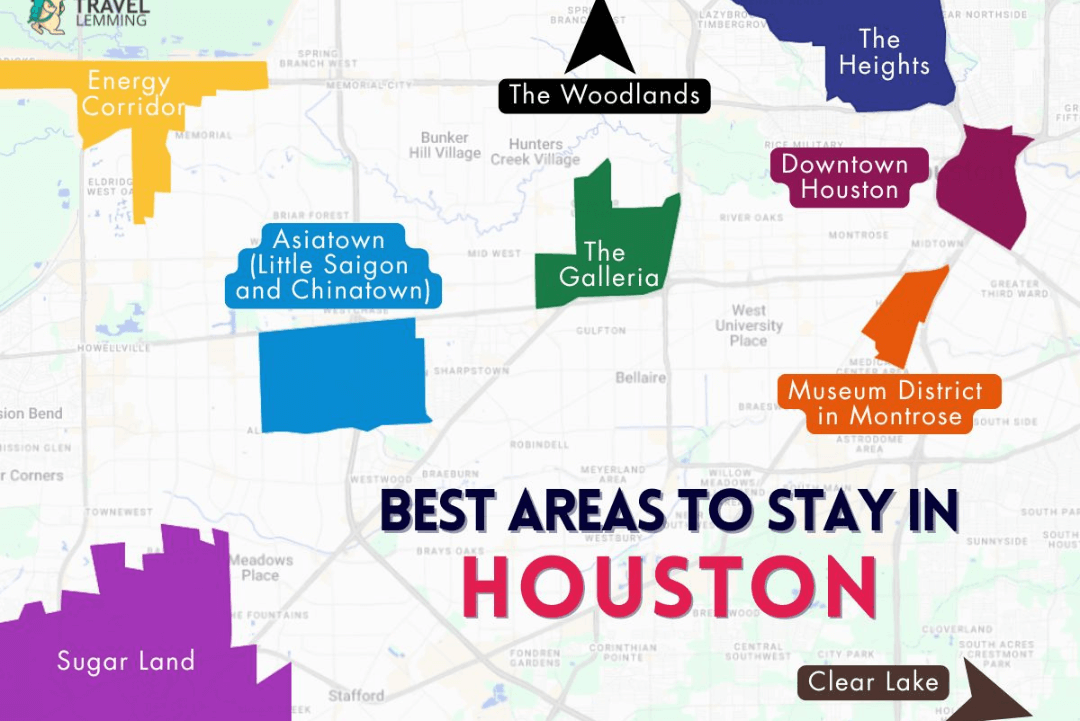
Here’s something most World Cup guides won’t tell you: where you stay in Houston is going to define your entire experience. Houston isn’t like New York or San Francisco where everything’s walkable and you can just pop between neighborhoods easily. Houston is MASSIVE! Like, 665 square miles of sprawl massive. The neighborhood you choose determines what you’re walking distance to, how easy it is to get around, and what kind of Houston you actually experience.
Some people want to be in the thick of downtown action with skyscrapers and sports bars everywhere. Others want a quieter, artsy vibe with local coffee shops and galleries. Some folks just want to be as close to NRG Stadium as possible so they can roll out of bed and stumble to the match. All of these are valid, but you need to make an intentional choice because you can’t really do all of it from one location.
This guide breaks down Houston’s major neighborhoods, what makes each one special, who they’re best for, and the real talk about what you’re getting into. Think of this as your neighborhood matchmaking service for World Cup 2026.
Downtown: The “I Want to Be in the Center of Everything” Choice
Let’s start with the most obvious option: Downtown Houston. This is where most tourists default to, and honestly, it’s not a bad call for World Cup visitors. Downtown puts you right in the middle of Houston’s business district, with skyscrapers, hotels, restaurants, and direct access to the Metro Rail Red Line that goes straight to NRG Stadium.
Downtown is where you’ll find major hotel chains (Marriott, Hilton, Hyatt, etc.), which means consistency and reliability if that’s your vibe. You’re walking distance to Discovery Green, the Theater District, Toyota Center, and Minute Maid Park. There are sports bars, restaurants, and entertainment options everywhere.
The Metro Rail runs right through downtown with multiple stops, so getting to NRG Stadium is straightforward. You hop on the Red Line and you’re at the stadium in 25–30 minutes. No car needed, no rideshare surge pricing, just easy public transit.
Here’s where downtown gets complicated: it’s a business district. It’s busy during the week and quieter on weekends. You’re also paying premium prices for the location.
The vibe downtown is very big-city energy—tall buildings, concrete, business suits mixed with sports jerseys.
Best for: First-time visitors, people who want easy transit access, groups who prioritize convenience.
Not great for: Budget travelers, people seeking neighborhood character.
Midtown: The “I Want to Party” Headquarters
If Downtown is Houston’s business district, Midtown is its playground. This is where young professionals and nightlife lovers gravitate.
Midtown is packed with bars, clubs, and late-night spots, all near the Metro Rail. World Cup season will push this energy to the extreme.
Accommodations range from boutique hotels to Airbnbs. Prices are slightly better than downtown.
The downsides? Noise, parking headaches, and bar-focused food.
Best for: Groups in their 20s–30s, nightlife-focused travelers.
Not great for: Families, light sleepers, quiet-seekers.
Montrose: The “I Want Cool, Artsy Houston” Pick
Montrose is one of Houston’s most interesting neighborhoods. Known for art, culture, and its LGBTQ+ roots, it offers creativity over conformity.
Expect galleries, coffee shops, murals, and some of Houston’s best restaurants.
Transit to NRG Stadium is doable but less direct. Many people rely on rideshare.
Best for: Culture seekers, foodies, LGBTQ+ travelers.
Not great for: Visitors prioritizing easiest stadium access.
The Heights: The “I Want Charming and Residential” Vibe
The Heights blends historic bungalows with modern restaurants and boutiques. It feels like a small town within a major city.
The downside is stadium access — there’s no Metro Rail connection.
Best for: Travelers wanting neighborhood charm and great food.
Not great for: Budget travelers, car-free visitors.
Medical Center: The “I’m Here for the Stadium” Play
The Medical Center isn’t exciting, but it’s incredibly strategic. You’re walking distance from NRG Stadium and directly on the Red Line.
Hotels are often more affordable and reliable.
Best for: Hardcore match attendees, families, budget-conscious travelers.
Not great for: Nightlife-focused visitors.
EaDo: The “Up-and-Coming Neighborhood” Choice
EaDo has transformed from warehouses to breweries, lofts, and sports bars.
Transit requires a rail transfer, but downtown is close.
Best for: Craft beer fans, early adopters.
Not great for: Travelers wanting polished, established areas.
Rice Village / West University: Quiet & Upscale
This leafy, upscale area is peaceful and safe with proximity to museums and the Medical Center.
Best for: Families, older travelers, museum lovers.
Not great for: Party groups, budget travelers.
Galleria Area: Shopping & Comfort
Centered around one of the largest malls in the U.S., this area emphasizes luxury and convenience over authenticity.
Best for: Shoppers, business travelers.
Not great for: Stadium-focused visitors without a car.
Making Your Neighborhood Decision
Ask yourself:
- How important is stadium access?
- What’s your budget?
- How much nightlife do you want?
- Do you have a car?
- What’s your vibe?
The Multi-Neighborhood Strategy
Split your stay or plan intentional neighborhood days to balance convenience and culture.
Final Neighborhood Wisdom
Houston is too large to wing it. Your location choice will shape your entire World Cup experience.
Choose intentionally.
Related Articles:
- Getting to NRG Stadium: Your Complete Transportation Guide
- The Ultimate Guide to Houston’s Food Halls
- World Cup Watch Parties: Where Houston Fans Gather